


Treadmills

Empower your preclinical research in exercise physiology, metabolism, and behavioral neuroscience with Columbus Instruments treadmills. Experience industry-leading solutions designed for confident, repeatable results, ensuring unmatched precision and reliable data to elevate your research impact.
- Used in 1,500+ peer-reviewed publications
- Designed for repeatable, noninvasive exercise protocols
- Compatible with metabolic and behavioral data systems
- Trusted by academic, pharmaceutical, and government labs
- Built for long-term reliability and serviceability

Enhance your metabolic and energy research using a rodent Metabolic Treadmill, configured for seamless integration with the Oxymax-CLAMS system to perform detailed studies on exercise effects on energy expenditure.
VO2 Max & Crossover Point Testing: Assess aerobic capacity with the Metabolic Treadmill, integrated with Oxymax, for precise indirect calorimetry.
Metabolic testing requires the dedicated Metabolic Treadmill because it features:
- Airtight Enclosures: Each exercise lane is contained within an isolated, air-tight compartment necessary for accurate open-circuit calorimetry.
- Real-Time Analysis: It integrates directly with the Oxymax Indirect Calorimetry system to simultaneously measure oxygen consumption (VO2) and carbon dioxide production (VCO2) during active exercise.
- Modular Construction: Multiple units can be connected, allowing researchers to merge lanes to operate from a single motor, making high-throughput studies more efficient.
Essential Integrated Components
- CI-Link Software: Automates data capture and analysis for VO2, VCO2, Respiratory Exchange Ratio (RER), and energy expenditure, with measurements collected as frequently as every five seconds for detailed monitoring.
- Mass Flow Control: Maintains a consistent flow of air at STP (Standard Temperature and Pressure) to ensure accurate respiratory measurements regardless of environmental conditions.
Core Temperature & Heart Rate
The Telemetric Metabolic Treadmill features an integrated antenna that maintains strong, interference-free reception of heart rate and core temperature signals from telemetry implants, even as animals move, providing reliable physiological data during exercise.
Specialized lanes read G2 telemetry transmitters to supplement VO2 and crossover point data, showing core body temperature every five seconds.
.svg)
Gain actionable insights into the brain’s response to exercise and strengthen your research outcomes with Columbus Instruments treadmills, designed for neuroplasticity and disease progression studies. Depend on advanced engineering trusted by leading researchers to achieve rigorous, reproducible neurological and behavioral data.
- Neurodegenerative Diseases: Researching how forced exercise can slow the symptoms of Alzheimer’s, Parkinson’s, and Huntington’s Disease.
- Fatigue & Depression: Using the treadmill fatigue test to measure lethargy or giving up behaviors, which are markers for depression or chronic fatigue syndrome.
- Spinal Cord & Brain Injury: Evaluating motor recovery and coordination after traumatic injuries.
For neurological and behavioral studies, select Columbus Instruments' specialized treadmill systems for precise, reliable data on Parkinson's disease, Alzheimer's disease, and spinal injuries.
Best Treadmill Models for Neuroscience Research
- Exer 3/6 Treadmill: Ideal for neurological and behavioral studies, this versatile system accommodates three rats or six mice, enabling high-throughput comparisons.
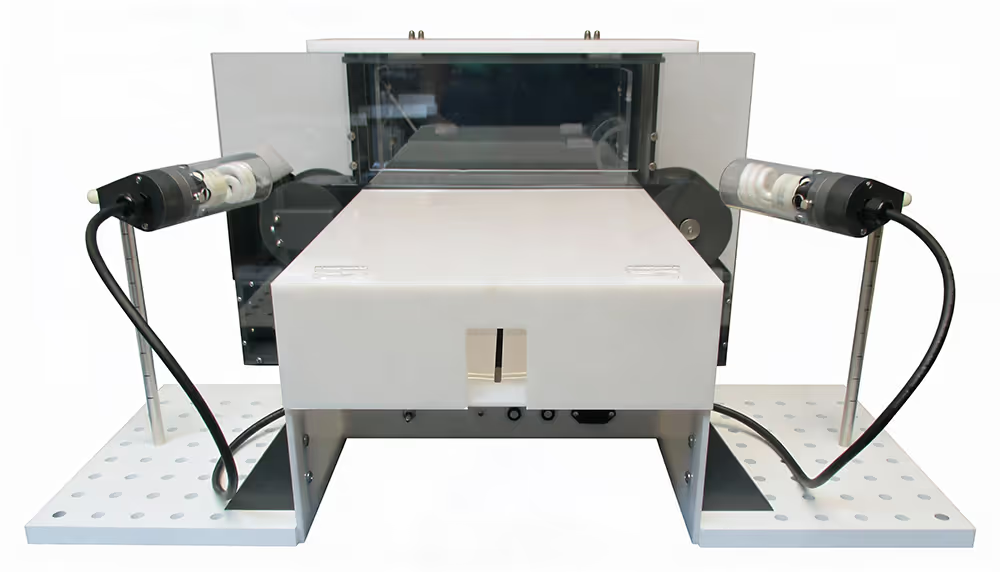
- Exer-Gait: This model is designed for thorough gait and motor coordination analysis. Its clear running belt and integrated lighting system facilitate high-speed video recording, enabling precise tracking and evaluation of animal movement patterns.
- Modular Treadmill: An adaptation of our popular Metabolic treadmill that features a top-mounted slot for tethered measurements such as EPhys, Opto/chemogenetics, microdialysis, or other applications that need a tether during exercise.
-
Benefit for Neuroscience
Operate smoothly at walking speeds. User-initiated automatic speed calibration allows labs with multiple treadmills to run them at the same speed setting even after many years of use. Critical for measuring the Treadmill Fatigue Test, a standard assay for fatigue-like behavior and lethargy.
Multiple stimuli options enforce exercise without excessive stress, which is vital when studying cognitive function or anxiety.
Supports manual or automatic changes (-16º to +25º with an adapter) to test motor capacity and coordination under different physical loads.
Allows researchers to monitor the individual performance of each subject, which is essential for identifying subtle behavioral variances in disease models.

Columbus Instruments treadmills are frequently cited in research for:
- Neurodegenerative Disease Models: Tracking motor decline in ALS, Parkinson's, and Alzheimer's.
If your research focuses on muscle and cardiovascular physiology, maximize your results with a customized Columbus Instruments treadmill system. Select streamlined high-throughput training or rich metabolic data, with dedicated systems tailored to your goals. - Neuroplasticity: Studying how exercise regimens can reverse dendritic spine loss or promote neural recovery.
- Disability Measurement: Assessing progressive neurological disability in models of Multiple Sclerosis.
- Muscle & Cardiovascular Physiology: Advanced research into physiological function under stress using the lab animal treadmill, a consistent tool for generating physiological insights.
- Muscular Dystrophy: Testing the endurance and muscle fiber integrity of models with muscle-wasting diseases.
- Cardiovascular Disease: Studying the effects of exercise on atherosclerosis, hypertension, and heart failure recovery.
- Sarcopenia (Aging): Examining how high-intensity interval training (HIIT) can mitigate muscle loss in aged mouse models.
If your research focuses on muscle and cardiovascular physiology, maximize your results with a customized Columbus Instruments treadmill system. Select streamlined high-throughput training or rich metabolic data, with dedicated systems tailored to your goals.
Exer 3/6 Treadmill
High-Throughput & General Exercise Research
.avif)
Exer 3/6 is recognized as a primary choice for studies in muscle physiology. It supports protocols to enhance muscle hypertrophy or assess cardiovascular endurance, with large-cohort support, enabling robust scientific discovery.
- Precise Control: The drive motor provides continuous speed adjustment from 2.5 to 100 m/m in increments as small as 0.1 m/m, enabling fine-tuned protocols for impaired or aged cardiovascular models.
- Versatility: It features removable lane dividers, allowing researchers to switch between three rat treadmill lanes or six mouse treadmill lanes on a single unit. The treadmill can be manually adjusted from 0° to +25° incline and up to -25° decline (with the downhill adapter), providing a full range of incline and decline settings for studies involving muscle loading, joint stress, or injury models.
- Toolless Removable Belt: Specifically designed for ease of maintenance in lab settings, with a focus on hygiene and modularity.
.avif)
Metabolic Treadmill
Cardiometabolic Phenotyping
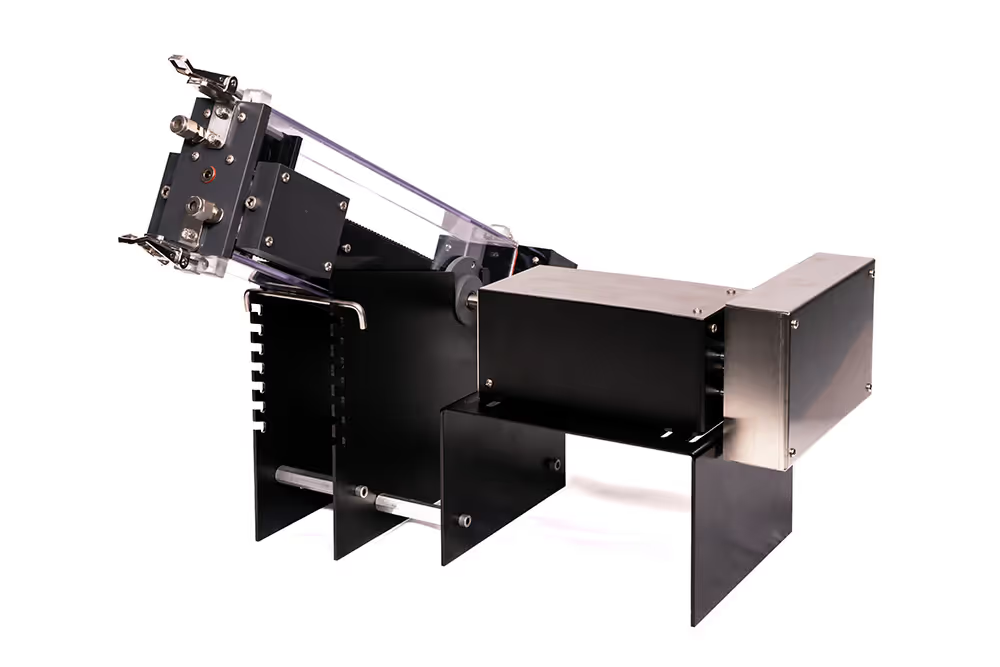
For advanced cardiovascular research, use the Metabolic Treadmill with the Oxymax-CLAMS system, a solution trusted to meet the rigorous demands of leading laboratories.
- VO2 Max Testing: It is used in the Graded Exercise Test (GXT) to assess cardiopulmonary function and aerobic capacity. This system records VO2, VCO2, and RER values every five seconds, providing high-resolution data to assist researchers in analyzing rapid physiological changes during cardiovascular testing.
- Heart Rate & Temperature: This treadmill uses a specialized antenna to prevent electrical noise from distorting real-time heart rate and core body temperature tracking, ensuring you receive precise physiological measurements during every test.
Comparison for Physiology Research
Metabolic Treadmill
Muscle training, endurance, injury
Cardiovascular health, VO2 max
Up to 6 mice or 3 rats
Typically single-lane isolated, modular and expandable
-16° to +25° (with adapter)
Manual or motorized up to +25°
Distance, speed, time; translational digital biomarker
VO2, VCO2, RER, heart rate, temperature; translational digital biomarker

GLP-1 Receptor Agonists
For assessing the impact of lean muscle mass loss with Glucagon-like peptide-1 Receptor Agonists (GLP-1s), Glucose-dependent Insulinotropic Polypeptide (GIPs), or other multi-agonist therapies, the VO2 max test has long served as the standard to measure physical fitness in rodents and humans alike. Discover why GLP-1-driven weight loss tends to also result in patients who are less cardio-metabolically fit than before treatment.
- Multi-Lane Continuous VO2 Monitoring: A high-throughput system that can measure multiple subjects simultaneously. Most multi-subject VO2 analyzers are multiplexed and present large gaps between data points, making identification of true peak VO2 very challenging. Continuous monitoring eliminates those gaps by installing dedicated O2 and CO2 sensors in each lane at an affordable price.
- Long-Time, Low-Maintenance Performance: Legendary for their reliability and longevity, the continuous sampling Oxymax matches the need for low maintenance by offering a Paramagnetic O2 sensor by default; no fuel cells to replace, ever.
Wired E-Phys Recording
Recording electrophysiology signals in live subjects with wired leads can be challenging. Doing the same in exercising subjects, even more so. Columbus Instruments Modular Treadmills can be customized with a top-mounted slot to accommodate electrical leads for measuring bioelectrical signals with third-party instrumentation.
Epigenetic Research
For epigenetic studies examining how exercise impacts offspring health, select Columbus Instruments systems for precise control and metabolic analysis that support your research objectives.
Researchers in this field typically prioritize the Exer 3/6 Multi-Lane Treadmill, especially if the primary focus is on standardized exercise protocols rather than real-time gas exchange.
- Standardization Across Trimesters: Maternal studies require precise control of exercise intensity (e.g., 40%, 65%, and 50% of max) across different pregnancy stages. The Exer 3/6 allows researchers to maintain these strict intensity levels across multiple subjects simultaneously, which is vital for large-scale epigenetic studies.
- Low-Stress Motivation: For pregnant subjects, minimizing stress is paramount. The Exer 3/6 supports soft-stimulus options (such as air-puff) as an alternative to electric-shock grids, ensuring that the biological data collected reflect the effects of exercise rather than maternal stress hormones.
Why These Models Are Preferred for Epigenetics
- Translational Value: These systems enable researchers to replicate human pregnancy exercise guidelines in mice, enhancing translational value for clinical applications.
- Long-Term Monitoring: These treadmills are frequently integrated with Oxymax-CLAMS, enabling 24-hour monitoring of both mothers and subsequent offspring to track long-term metabolic homeostasis.
- Drug Discovery: Testing new pharmaceuticals to see if they improve physical performance or if their side effects include exercise intolerance.
- Environmental Studies: Using treadmills inside environmental chambers to study how extreme heat, cold, or hypoxia (low oxygen) affects physical performance.
Key Features
Toolless Removable Belt
- Sliding side panels and toolless thumb screws to provide quick access to the belt assembly
Inclination
- Automatic: -16° to 25° with 0.1° increments
- Manual: -15° to 25° with 5° increments
Belt Speed
- 1.5 m/min to 102.3 m/min
Acceleration
- Adjustable 0.0 to 25.5 m/min2
Calibration
- Included automatic belt speed and odometer distance calibration
Stimulus Options
- Electrical: Up to 2.34 mA, 200 ms pulse
- Air Puff: Up to 40 PSI, 200 ms pulse
Stimulus Repetition Rate
- 1,2, or 3 Hz
Stimulus Voltage
- 117 VAC, 50/60 Hz
Dimensions
- 83.8 x 50.8 x 50.8 cm (33.0” x 20.0” x 20.0”)
Capacity
- 3 rats or 6 mice per treadmill
Toolless Removable Belt
- Sliding side panels and toolless thumb screws to provide quick access to the belt assembly
Belt Speed
- 5 cm/s to 187 cm/s
Acceleration
- Adjustable 0.0 to 25.5 m/min2
Belt Speed Range
- 5.0 to 187 cm/s
Dimensions
- 69.3 x 26.7 x 63.5 cm (35.0” x 18.2 “ x 13.0”)
Light Box Dimensions
- 88.9 x 46.4 x 33.1 cm (35.0” x 18.2” x 13.0”)
Inclination
- Automatic: -16° to 25° with 0.1° increments
- Manual: -15° to 25° with 5° increments
Belt Speed
- 1.5 m/min to 102.3 m/min
Acceleration
- Adjustable 0.0 to 25.5 m/min2
Calibration
- Automatic belt speed and odometer distance calibration
Stimulus Options
- Electrical: Up to 2.34 mA, 200 ms pulse
- Air Puff: Up to 40 PSI, 200 ms pulse (not for metabolic VO2 applications)
Stimulus Repetition Rate
- 1,2, or 3 Hz
Stimulus Voltage
- 117 VAC, 50/60 Hz
Lanes
- 1-4 individually enclosed per motor controller
Enclosure Dimensions
- Mouse: 15.125" x 2" x 4" - 14g-50g
- Rat: 22" x 5.5" x 8" - 50g - 350g
- Rat XL: 30.6" x 5.5" x 8" - 350g-800g
Key Maintenance Information
On updated models, such as the Exer 3/6, the running belt is designed for fast replacement—removal and installation takes under one minute and requires no tools, reducing equipment downtime between experiments.
- Automatic Tensioning: Most Columbus Instruments systems feature automatic tensioning, so you don't have to manually calibrate the belt's slack after installing a new one.
- Cleaning Compatibility: Replacement belts are made from non-corrosive materials (such as PVC or specialized polymers) that are resistant to repeated wash cycles and common laboratory disinfectants.
Frequently Asked Questions - FAQs
Yes. Our versatile Exer 3/6 treadmill features removable, adjustable lane dividers. This allows you to easily reconfigure the unit to accommodate either six mouse treadmill lanes or three rat treadmill lanes, providing maximum flexibility for your lab.
While a standard lab animal treadmill is used for general exercise and endurance, a rodent metabolic treadmill (such as our Oxymax-integrated modular system) features an air-tight enclosure. This allows precise measurement of VO2 and VCO2, enabling researchers to calculate the Respiratory Exchange Ratio (RER) and heat production during a mouse or rat metabolic treadmill session.
A typical mouse run test involves an acclimation period followed by a staged increase in belt speed. Our CI-Link software automates this process, starting at low speeds (e.g., 5–10 m/min) and accelerating per your protocol to determine aerobic capacity or time-to-exhaustion.
To ensure consistent forced-rat or forced-mouse exercise, our treadmills are equipped with a rear stimulus grid. This grid can be configured for either an electrical or an air-puff soft stimulus, encouraging the animal to maintain the belt's pace without the variability observed in voluntary wheel running.
Our high-precision motors operate at speeds ranging from 0 to 100 meters per minute. This allows for everything from a slow walk to high-intensity mouse treadmill sprints.
Absolutely. The rodent treadmill features manual or automatic inclination adjustments (typically 0° to +25°). For a treadmill for rats or mice requiring eccentric muscle loading, an optional downhill adapter is available to provide declination (down to -15° or -25° depending on the model).
Columbus Instruments uses high-quality, non-corrosive materials like Lexan, PVC, and stainless steel. The treadmill for mice and rats features a textured belt to facilitate animal grip and a removable tray for easy waste cleanup after a forced exercise session.
Our systems integrate directly with CI-Link software. Whether you are running a mouse metabolic treadmill or a larger rat study, the CI-Link software logs speed, distance, and gas exchange data in real time and exports them directly to CSV format for analysis.
Because their treadmills (such as the Exer 3/6 and the Metabolic Treadmill) use specialized textured or clear materials to ensure animal grip and visibility, it is standard practice for labs to purchase multiple belts for multispecies experiments and use. The Exer 3/6 features a toolless, removable treadmill belt for easy belt replacement.
Types of Replacement Belts Available
- Clear Optical Belts: For the ExerGait system, these crystal-clear, seamless loops allow cameras to track foot-pad placement beneath the treadmill for gait analysis.
- Secondary Drive Belts: In addition to the walking belt the animal runs on, internal drive belts connect the motor to the pulleys and are available if needed.
- Standard Textured Belts: Used for the Exer 3/6, these belts are designed to promote animal grip and withstand the rigorous cleaning required after forced rat or forced mouse exercise sessions. Best practice is for labs to purchase multiple belts and designate one set for mouse testing and another for rat testing.
Cleaning a Columbus Instruments treadmill (such as the Exer 3/6 or Modular systems) requires specific steps to ensure biological waste is removed. The Exer 3/6 features a toolless, removable treadmill belt for easy belt replacement.
- Remove Partitions: Take out the lane dividers/partitions first to gain full access to the belt.
- Sanitize: Spray a clean cloth with 70% Isopropyl Alcohol or a mild lab disinfectant and wipe the entire surface of the belt.
- Rinse and Dry: Wipe down with a damp cloth to remove any residue, then follow with a dry cloth or paper towel.
- The Waste Tray: Slide out the tray located beneath the belt. Empty it, sanitize it with alcohol, and replace it.
Deep Cleaning (Weekly or Post-Study)
For a thorough clean, or if the belt has lost its grip due to oil buildup.
- Power Off: Always unplug the treadmill from the wall outlet before deep cleaning.
- Scrub the Texture: Use a soft nylon brush (like a tire brush or a toothbrush) to gently scrub the belt’s textured surface. This removes particles trapped in the tread. Warning: Do not use a metal brush, as it will damage the belt's grip and could damage the stimulus grids.
- Manual Rotation: Turn the belt by hand to expose new sections. You will typically need to rotate and spray three to four times to cover the entire surface area.
- Air Dry: Allow the belt to air dry completely before plugging the machine back in. Moisture trapped near the motor or controller can cause electrical failure.
Cleaning the Stimulus Grids
- Avoid Direct Spray: Do not spray liquids directly onto the shock or air-puff grids.
- Wipe-Only: Dampen a cloth with alcohol and carefully wipe the grid bars. Ensure no lint or paper towel bits are left between the bars, as this can cause a short circuit or phantom stimulus.
For Metabolic Treadmills
- The Waste Tray: Slide out the tray located beneath the belt. Empty it, sanitize it with alcohol, and replace it.
- Removable End Caps: The Modular Metabolic Treadmill’s end caps are removable. This allows you to wash through debris along the entire length of the assembly more easily.
- Absorbent Pads: Many researchers use fitted, absorbent pads at the base of the treadmill during sessions. These can be swapped out between animals to make the final belt cleaning much faster.
 Powered by Bioz